
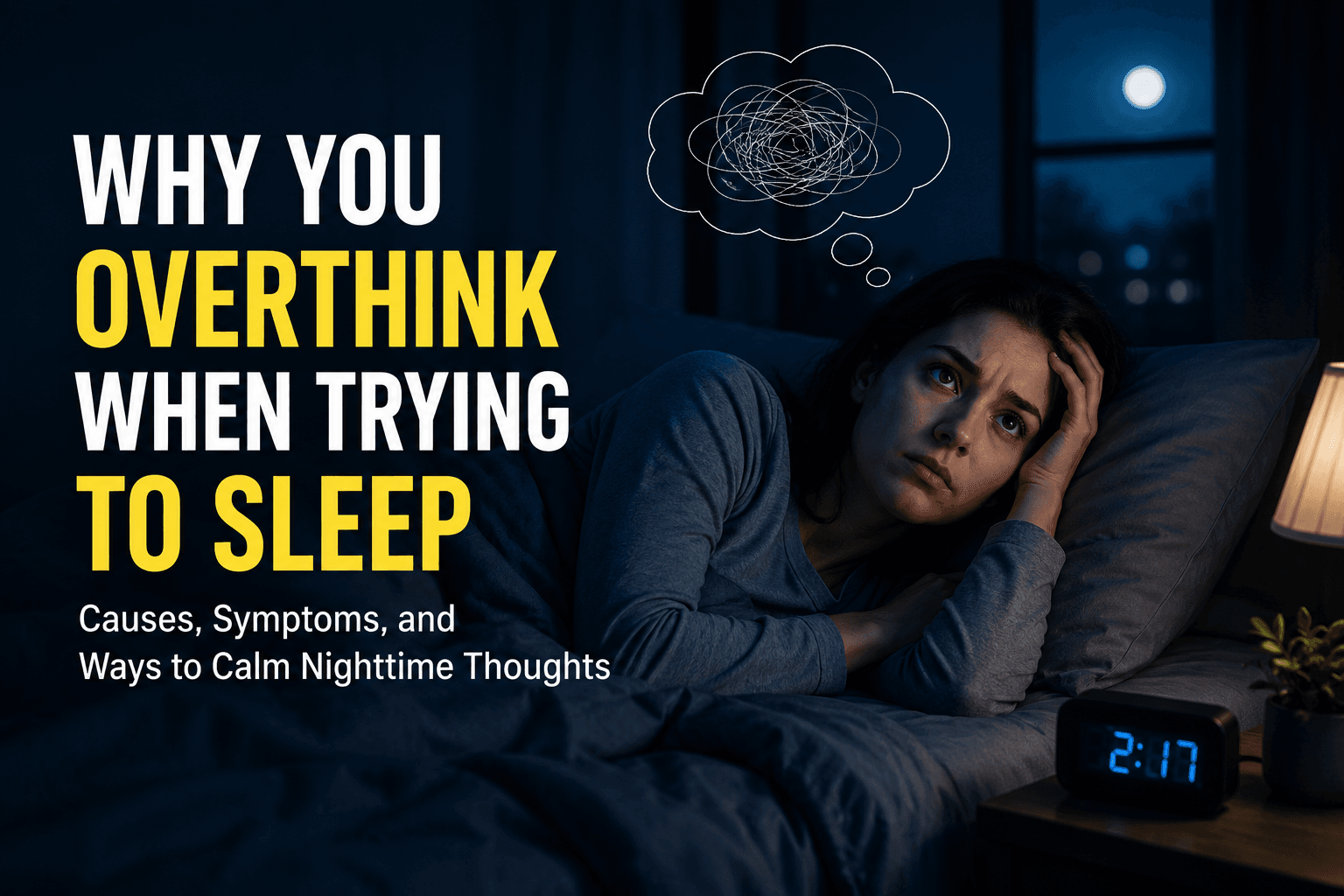
Why Your Mind Starts Overthinking When You Try to Sleep
Many people share the same frustrating experience at night.
During the day you may feel tired, busy, and even overwhelmed. You look forward to going to bed because you believe sleep will finally give your mind a break.
But the moment your head touches the pillow, something unexpected happens.
Your thoughts begin to race.
Suddenly your mind replays conversations from earlier in the day. You start thinking about problems you forgot about hours ago. Future plans, worries, and random ideas appear one after another.
Instead of drifting into sleep, your brain becomes more active.
If this sounds familiar, you are not alone.
Overthinking at bedtime is extremely common, and it has several biological and psychological causes. Understanding why it happens can help you manage it more effectively and improve your sleep quality.
Your Brain Finally Has Time to Think
One of the biggest reasons overthinking happens at night is simple: your brain finally has time to process things.
During the day your attention is constantly pulled in different directions.
You may be working, talking to people, checking messages, commuting, or solving tasks. These activities occupy your mental space and prevent deeper thoughts from emerging.
When nighttime arrives, the environment becomes quiet. Distractions disappear.
Your brain now has the opportunity to process everything that happened during the day.
Thoughts that were pushed aside earlier may suddenly appear.
This mental processing is natural. The brain uses quiet periods to organize memories, evaluate experiences, and plan future actions.
However, when this process becomes intense, it can prevent sleep.
Stress Amplifies Nighttime Thinking
Stress plays a major role in nighttime overthinking.
When the brain experiences stress, it tries to anticipate potential problems in order to protect you.
This protective mechanism can cause the brain to analyze situations repeatedly.
For example, if you experienced a stressful conversation earlier in the day, your brain may replay it at night while trying to determine whether something could have been handled differently.
Similarly, if you are worried about upcoming responsibilities, your brain may begin planning solutions when you lie down.
Unfortunately, this mental activity can keep the nervous system active when it should be relaxing.
The Role of the Nervous System
Your nervous system controls whether your body feels alert or relaxed.
Two major systems regulate this balance.
The sympathetic nervous system activates alertness and prepares the body for action.
The parasympathetic nervous system allows the body to rest and recover.
For sleep to occur, the body must shift into parasympathetic mode.
However, when the brain continues thinking intensely, the sympathetic system remains active.
This can lead to:
- racing thoughts
- increased heart rate
- difficulty falling asleep
Even if your body feels tired, the brain may still be in alert mode.
Nighttime Silence Makes Thoughts Louder
Another factor that contributes to overthinking is the quiet nighttime environment.
During the day there is constant background noise, movement, and sensory input.
These distractions compete for your attention.
At night those distractions disappear.
Without competing stimuli, your thoughts become more noticeable.
Ideas that might have felt small during the day can feel much bigger in the quiet of your bedroom.
Screen Use Before Bed Can Trigger Overthinking
Many people use their phones or computers before sleep.
While this habit feels relaxing, it can stimulate the brain in several ways.
First, screens expose the eyes to blue light, which suppresses melatonin production.
Melatonin is the hormone responsible for signaling the body that it is time to sleep.
Second, online content can trigger emotional responses.
Social media posts, news articles, or work messages can activate thoughts that continue after you turn off the screen.
This stimulation can make the brain more active just when it should be winding down.
Anxiety and Future Planning
Another common reason for bedtime overthinking is anxiety about the future.
Many people begin thinking about responsibilities they must handle the next day.
Questions like these may appear:
- Did I finish everything I needed to do?
- What if tomorrow becomes stressful?
- Did I forget something important?
These thoughts can cause the brain to enter problem-solving mode.
While planning can be useful during the day, it becomes disruptive when it happens at bedtime.
How Overthinking Affects Sleep Quality
Overthinking does more than delay sleep.
When the brain remains active, the nervous system stays alert.
This makes it harder for the body to transition into deeper sleep stages.
As a result, people who struggle with nighttime overthinking may experience:
- difficulty falling asleep
- lighter sleep cycles
- waking during the night
- feeling tired in the morning
Over time this pattern can create frustration and anxiety about sleep itself.
How to Calm an Overactive Mind Before Sleep
Although overthinking can feel uncontrollable, several habits can help calm the mind before bedtime.
Write Down Your Thoughts
One simple strategy is writing your thoughts down before bed.
Journaling allows the brain to release concerns onto paper instead of holding them internally.
Many people find that writing down worries or plans helps reduce mental pressure.
Create a Wind-Down Routine
Your brain needs time to transition from daytime activity to sleep.
Establishing a calming routine before bed can help signal to the body that it is time to relax.
This routine might include:
- reading
- gentle stretching
- listening to calm music
- meditation or breathing exercises
Reduce Screen Time
Limiting screen exposure before bed can significantly improve sleep quality.
Turning off electronic devices at least 30–60 minutes before bedtime allows melatonin levels to rise naturally.
Practice Slow Breathing
Breathing exercises can activate the parasympathetic nervous system.
Slow breathing signals safety to the body and helps reduce mental activity.
Try inhaling slowly through your nose and exhaling gently through your mouth.
Maintain a Consistent Sleep Schedule
Going to bed and waking up at the same time every day strengthens your circadian rhythm.
Consistency helps the body recognize when it should prepare for sleep.
When Overthinking Becomes Chronic
Occasional nighttime overthinking is normal.
However, if racing thoughts occur every night and prevent sleep, it may be helpful to examine stress levels and daily habits.
Chronic stress, anxiety disorders, or unresolved emotional concerns can contribute to persistent mental activity at night.
Improving relaxation habits and managing stress during the day can significantly improve sleep.
For a deeper understanding of how sleep cycles and daily habits influence sleep quality, you can explore the Complete Guide to Fixing Poor Sleep Naturally, which explains how the brain and body regulate sleep.
FAQ
Why does my brain think more at night?
The brain processes unresolved thoughts when distractions disappear. Nighttime quiet allows these thoughts to become more noticeable.
Is overthinking before sleep normal?
Yes. Many people experience racing thoughts at bedtime. However, frequent overthinking can disrupt sleep quality.
How can I stop overthinking at night?
Writing thoughts down, reducing screen use, and practicing relaxation techniques can help calm the mind before bed.
Does stress cause nighttime overthinking?
Yes. Stress activates the nervous system and increases mental activity, which can lead to racing thoughts before sleep.
“To understand how sleep cycles and nighttime anxiety affect sleep in more detail, read our complete guide to fixing poor sleep naturally.”