Why Your Body Feels Tense at Night
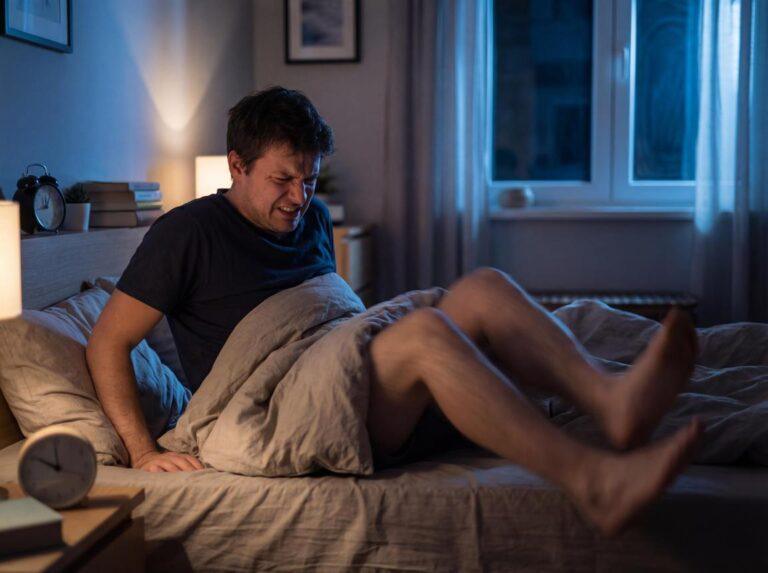
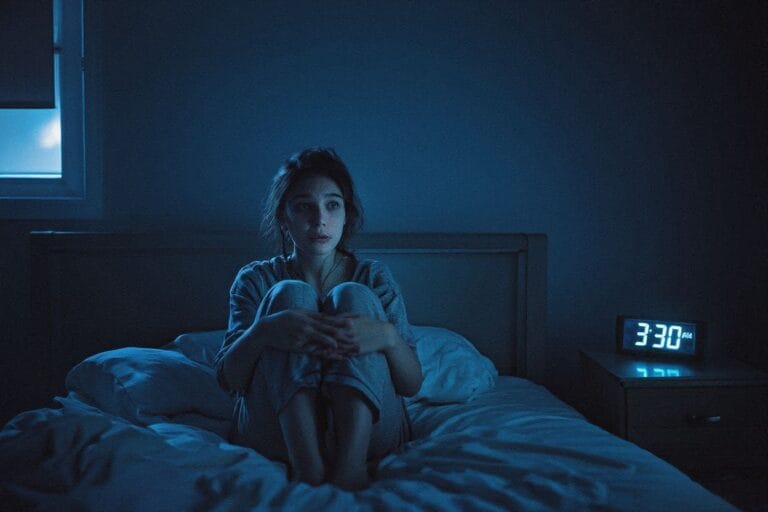
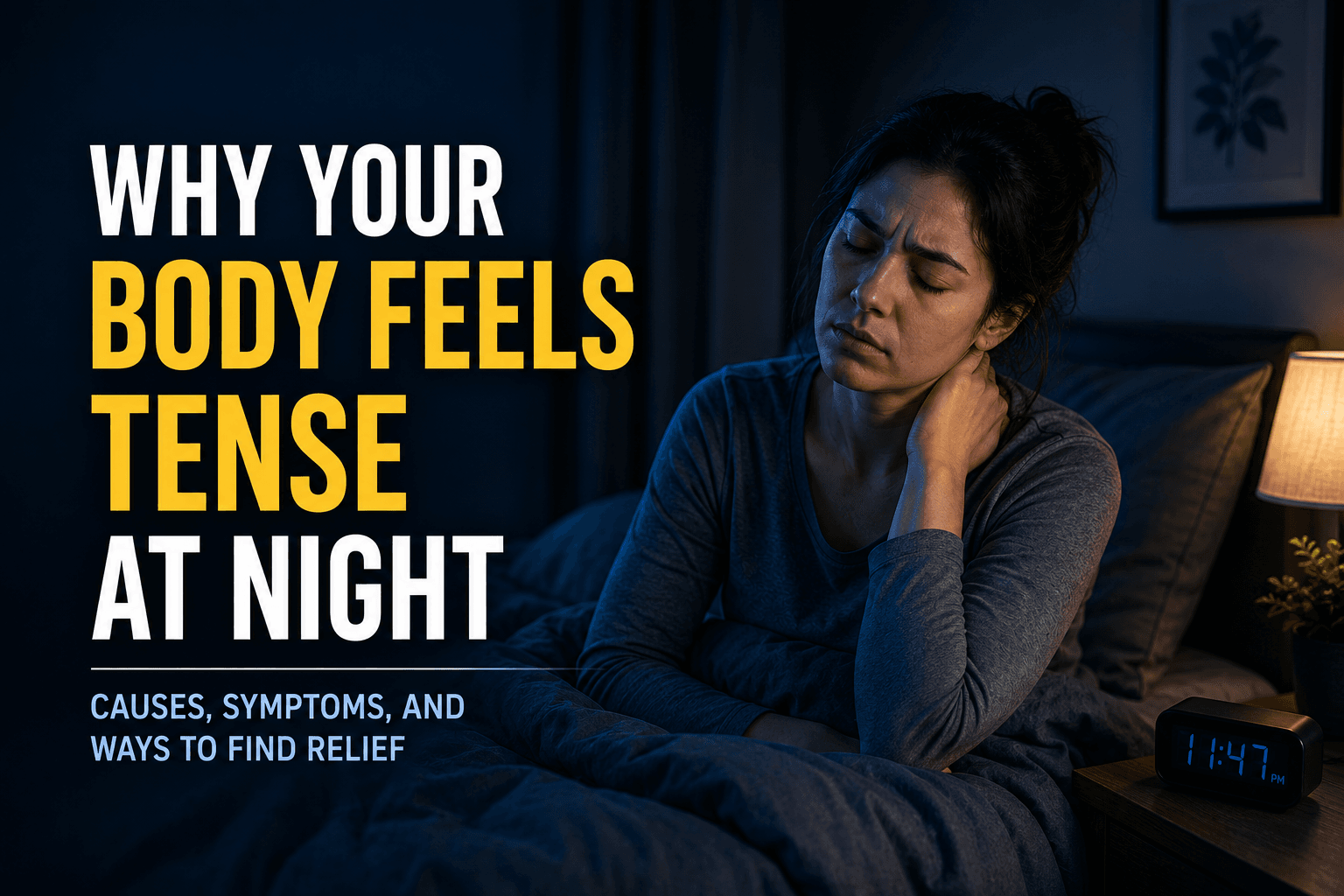
It can be frustrating to feel tense in the body at night when the body should be winding down, preparing for sleep. Some people get tight muscles, shoulders up to their ears, tension in their jaw, tightness in their chest, restless legs, or a general feeling that the body is not able to relax fully when they get into bed.
Others have a hard time clearly articulating the sensation. You may feel mentally drained but physically awake or uncomfortable at the same time.
You may notice that nighttime tension is worse when the room is quiet and distractions have disappeared. Symptoms may also be worse after days of emotional stress, poor sleep, long screen time, or times of anxiety and overstimulation.
While occasional tension at night is common during stressful periods, persistent or worsening symptoms should always be properly evaluated when necessary.
Why it can be difficult to physically relax at night
The body does not instantly switch from stress into deep relaxation.
Throughout the day, physical tension can quietly build from:
- emotional stress
- overthinking
- poor posture
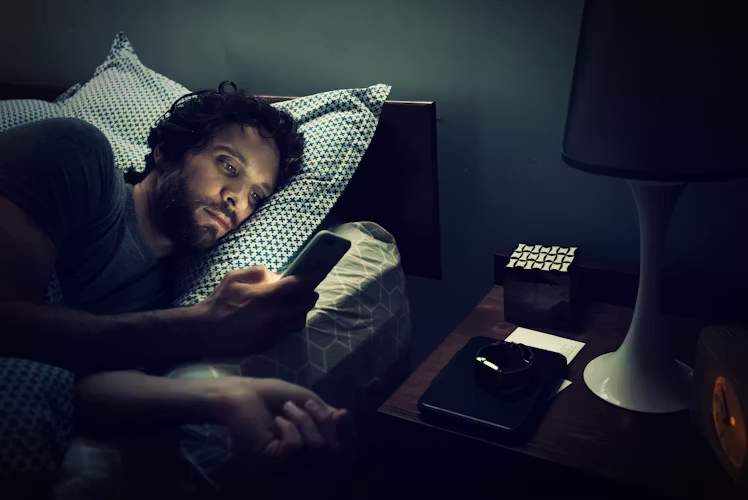
- screen exposure
- lack of movement
- anxiety
- exhaustion
- disrupted sleep
At night, the body suddenly becomes still and quiet. For many people, this makes physical sensations feel much more noticeable.
Some people describe:
- tight shoulders
- jaw clenching
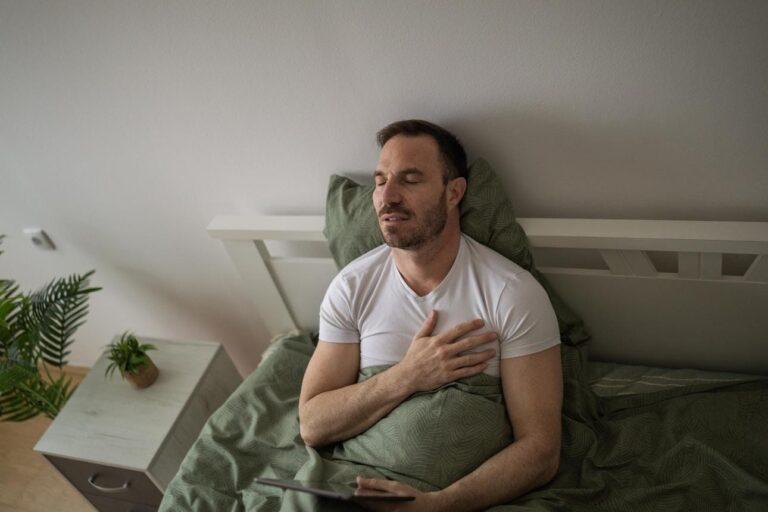
- chest pressure
- stiff muscles
- shaky tension
- difficulty relaxing physically
- feeling “on edge” before sleep
Others notice they constantly reposition themselves because the body never feels fully comfortable.
Stress and Anxiety May Lead to Physical Tension
Stress does not only affect thoughts. It can also affect the body physically.
During stressful periods, many people unknowingly hold tension in:
- the neck
- shoulders
- chest
- stomach
- legs
- jaw
By nighttime, the body may still remain physically alert even when mentally tired.
Some people notice:
- muscle tightness
- shallow breathing
- restless movement
- heavy chest feelings
- shaky muscles
- sudden adrenaline sensations
For others, tension becomes strongest right before falling asleep.
Many people also notice symptoms worsen during periods of
- sleep anxiety
- emotional burnout
- chronic stress
- overthinking
- inconsistent sleep
Lack of sleep can leave the body feeling more sensitive
Poor sleep quality may increase physical sensitivity and tension over time.
If sleep is inconsistent for long periods of time, the body may find it more difficult to fully relax before sleep. Emotional exhaustion and chronic fatigue can also exacerbate nighttime discomfort.
Some people describe the body as
- physically restless
- overstimulated
- stiff
- shaky
- uncomfortable
- unable to fully “switch off”
Symptoms may feel stronger after several nights of poor sleep.
Many people also notice tension increases during periods of emotional stress or major life changes.
Why Symptoms Seem Worse at Night
Nighttime naturally removes distractions.
In the daytime, the physical tension can be partly masked by work, movement, screens, conversation, and noise. One night is still, and one can more readily feel one’s inner sensations.
For some people, the body suddenly feels
- more tense
- more alert
- more uncomfortable
- more physically sensitive
Others become more aware of breathing, muscle tightness, or chest sensations while lying quietly in bed.
This is not to say that something bad is happening, but if you have chronic symptoms that keep getting worse, you should have them properly evaluated.
Other symptoms that may be related to body tension
Sometimes physical tension at night may occur with other nighttime symptoms.
Some people also experience:
- chest tightness
- shaking feelings
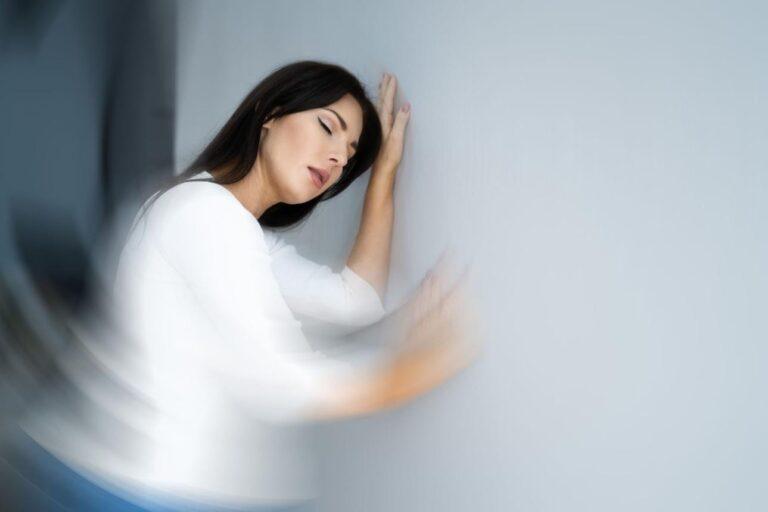
- dizziness
- body vibrations
- tingling sensations
- breathlessness
- racing heartbeat
- body jerks
- adrenaline rush feelings
- restless sleep
For some people, several nighttime symptoms begin appearing together during stressful or exhausting periods.
Tips to Help the Body Relax Before Sleep
The goal is not forcing perfect sleep instantly. The goal is gradually reducing physical overstimulation before bedtime.
Helpful nighttime habits may include:
- reducing caffeine later in the day
- improving sleep consistency
- limiting late-night screen exposure
- stretching gently before bed
- creating a calmer nighttime routine
- dimming lights earlier
- reducing overstimulation at night
- allowing more recovery time after stressful days
Some people also notice improvement from:
- slower nighttime routines
- relaxing music
- breathing exercises
- reducing sleep pressure
- avoiding panic-focused searching at night
Small improvements often help more over time than trying to “force” sleep quickly.
When to Get Medical Help
Occasional body tension at night may happen during stressful periods or after poor sleep. But any symptoms that persist or worsen should always be discussed with a healthcare professional.
Medical evaluation may be important if symptoms happen alongside the following:
- severe chest pain
- numbness
- weakness
- severe dizziness
- breathing difficulty
- worsening neurological symptoms
- severe pain
- fainting
- loss of coordination
Physical symptoms should never be self-diagnosed online without proper medical guidance.
Related Sleep Guides
Many of the night symptoms could overlap with wider patterns of sleep disruption, anxiety-related sleep issues, and nighttime body sensations. You can also look at our Sleep Problems & Better Sleep Guide for more symptom explanations and recovery tips for sleep.
Frequently Asked Questions
Why does my body feel tense at night?
Stress, anxiety, poor sleep, overstimulation, emotional exhaustion, or muscle tension built throughout the day may contribute to nighttime tension.
Can anxiety make your body feel physically tense?
Yes. Anxiety may sometimes increase muscle tightness, physical alertness, chest tension, jaw clenching, or restless feelings before sleep.
Why does body tension feel worse before sleep?
Many people become more aware of physical sensations once the environment becomes quiet and distractions disappear at night.
Can poor sleep increase muscle tension?
Poor sleep quality may increase physical sensitivity, fatigue, discomfort, and nighttime tension over time.
Should I worry about feeling tense at night?
Occasional symptoms are common during stressful periods, but persistent or worsening symptoms should always be medically evaluated.
Trusted Sources & References
- Sleep Foundation — Stress and Sleep:
https://www.sleepfoundation.org/stress-and-anxiety - Cleveland Clinic — Anxiety Symptoms:
https://my.clevelandclinic.org/health/diseases/9536-anxiety-disorders - PubMed — Stress and Sleep Research:
https://pubmed.ncbi.nlm.nih.gov/30374942/
Bottom Line
It can be uncomfortable and emotionally draining to feel physically tense at night, especially when your body feels like it can’t fully relax before sleep.
Stress, anxiety, emotional exhaustion, poor sleep, and overstimulation can cause nighttime muscle tension and physical discomfort. Having symptoms from time to time during difficult times is not uncommon; however, persistent or worsening symptoms should always be properly assessed.
Better sleep habits, less overstimulation, and more time for the body to recover from stress may slowly help improve comfort and relaxation at night.”
Google is placing more importance on content that is people-first, trustworthy, experience-based, and truly helpful to readers, instead of content made just for ranking.
About the Author
Kishalay Roy is the publisher of CoreBalanceLife, a website about sleep and topics like nighttime anxiety, strange sensations in the body before sleep, sleep disruption, and practical education about sleep wellness. He aims to produce calm, evidence-based content that will help readers to better understand common nighttime symptoms and sleep-related problems.