Glycine for Sleep: 7 Surprising Ways It Improves Sleep (or Does Nothing)
Glycine for sleep is quietly becoming popular among people who don’t respond to melatonin or magnesium. People sometimes call it just a basic building block, yet it can make rest seem fuller and leave you feeling more renewed.
Some folks find that picture matches them just right.
Some people find glycine has zero effect at all.
This split experience? That is what trips folks up about glycine. Not a sedative, so it won’t slow your thoughts. Won’t drag you into unconsciousness either. Most issues tied to sleep – those never really get better with it.
What turns glycine from underwhelming into effective lies in knowing how it acts – yet also where it falls short.
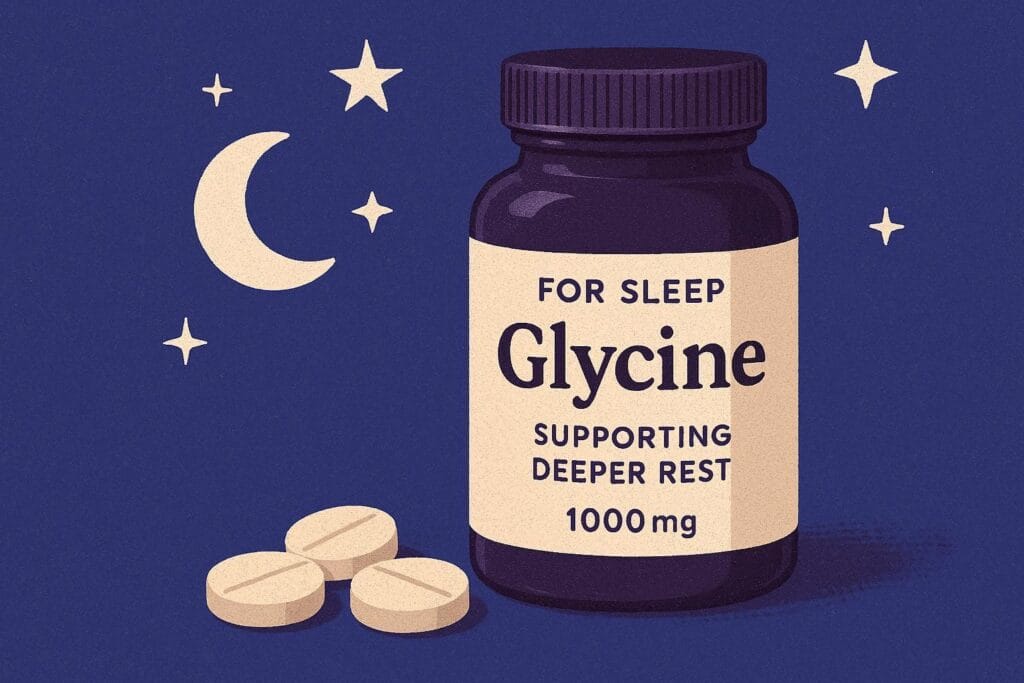
What glycine does inside your body
Glycine is an amino acid involved in:
- Body temperature regulation
- Nervous system signaling
- Muscle relaxation
How it affects sleep isn’t straightforward.
Falling asleep isn’t directly triggered by glycine; instead, it guides the body toward conditions that support rest. A small drop in internal heat often follows its presence – this change nudges systems into slower rhythms. Deeper phases of rest tend to arrive more smoothly when warmth dips just enough.
This explains the link between glycine and deeper rest, rather than falling asleep quickly.
When deep rest and healing matter most, glycine tends to help the most with sleep.
Why Glycine for Sleep Helps Some People
People might find it useful if they:
- Still tired even after plenty of sleep
- Wake up tired despite “good” sleep
- Have light or shallow sleep
- Body tight, not mind racing
Falling into rest, glycine helps the body renew itself during sleep.
Why Glycine for Sleep Does Nothing for Others
Here, plans start to fall apart.
Glycine often fails when:
- Falling asleep is the main problem
- Sleep timing is misaligned
- Restless minds often take control
- Waking up often breaks sleep into pieces
When rest keeps breaking, deeper stages on their own make little difference.
- Glycine doesn’t make you sleepy
Not everyone feels drowsy after taking glycine. Some notice a shift in energy levels instead. What happens can depend on body chemistry. Timing of doses plays a role too. People respond differently based on when they take it. Sleep patterns already present might influence effects. Even diet could change how the supplement works
Better rest comes without sluggishness. That shift matters more than it sounds.
- Morning light shapes rhythms deeper than pills ever could
If taken later than intended, the impact fades. What matters is timing – too slow, and it barely registers.
- Most effective when sleep happens at consistent times
Schedules that lack routine weaken what it offers.
- Healing comes first, rules follow behind
Fixing circadian problems isn’t something it does.
- Changes might hit hard when you least think so
What glycine does shows up quietly, never loud.
- Might just not feel tired enough yet
Lying around too long softens the effect.
- Few people notice it when bigger names grab the spotlight
Figuring out what helps gets tricky when you mix several pills at once.
How Glycine Fits Into Sleep Physiology
Morning light often resets the internal clock, helping nighttime sleep start stronger. When muscles relax fully, drifting into deep rest feels more natural.
Sleep research summarized by the Sleep Foundation explains that temperature regulation and sleep depth are tightly connected — and small physiological shifts can meaningfully affect sleep quality.
Source: Sleep Foundation
When Glycine Is Worth Trying
Glycine may help if:
- You wake up tired after enough sleep
- Sleep feels shallow
- Your body feels tense at night
- You want a non-hormonal option
Best used alongside help from others, rather than standing alone.

When to Skip Glycine
Avoid or pause it if:
- Falling asleep stands as the primary challenge
- You wake frequently at night
- Your sleep schedule is inconsistent
Fixing the wrong thing just adds noise. What you stack matters less than whether it fits.
How to Use Glycine More Effectively
If you try glycine:
- Earlier that night works better
- Keep sleep timing consistent
- Avoid stacking multiple sleep aids
- Outcomes unfold across seven days, never pinned to a single evening
When signals line up, sleep gets better.
Conclusion
Not everyone feels a change when using glycine for better rest – yet a few do report feeling more refreshed. For certain individuals, it makes a subtle difference in how their body recovers overnight.
Truth earns trust when words match real experience. Figuring out the times glycine helps – well, that matters more than saying it does every time.
Clear thoughts guide others – this builds real trust.