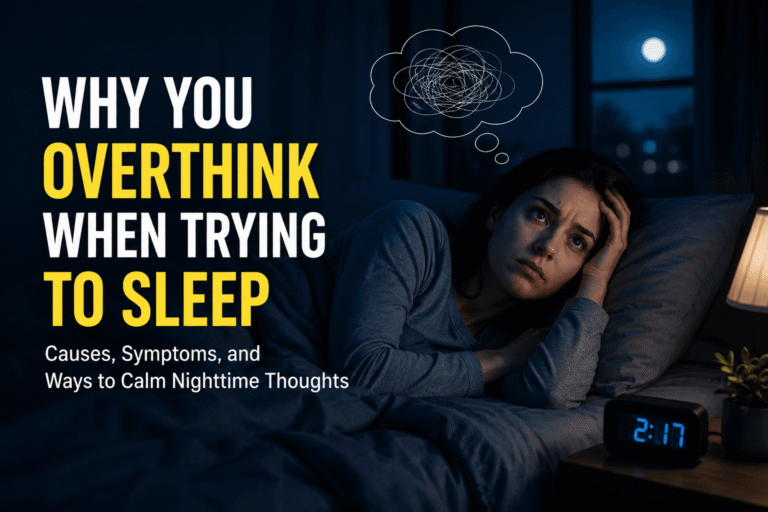
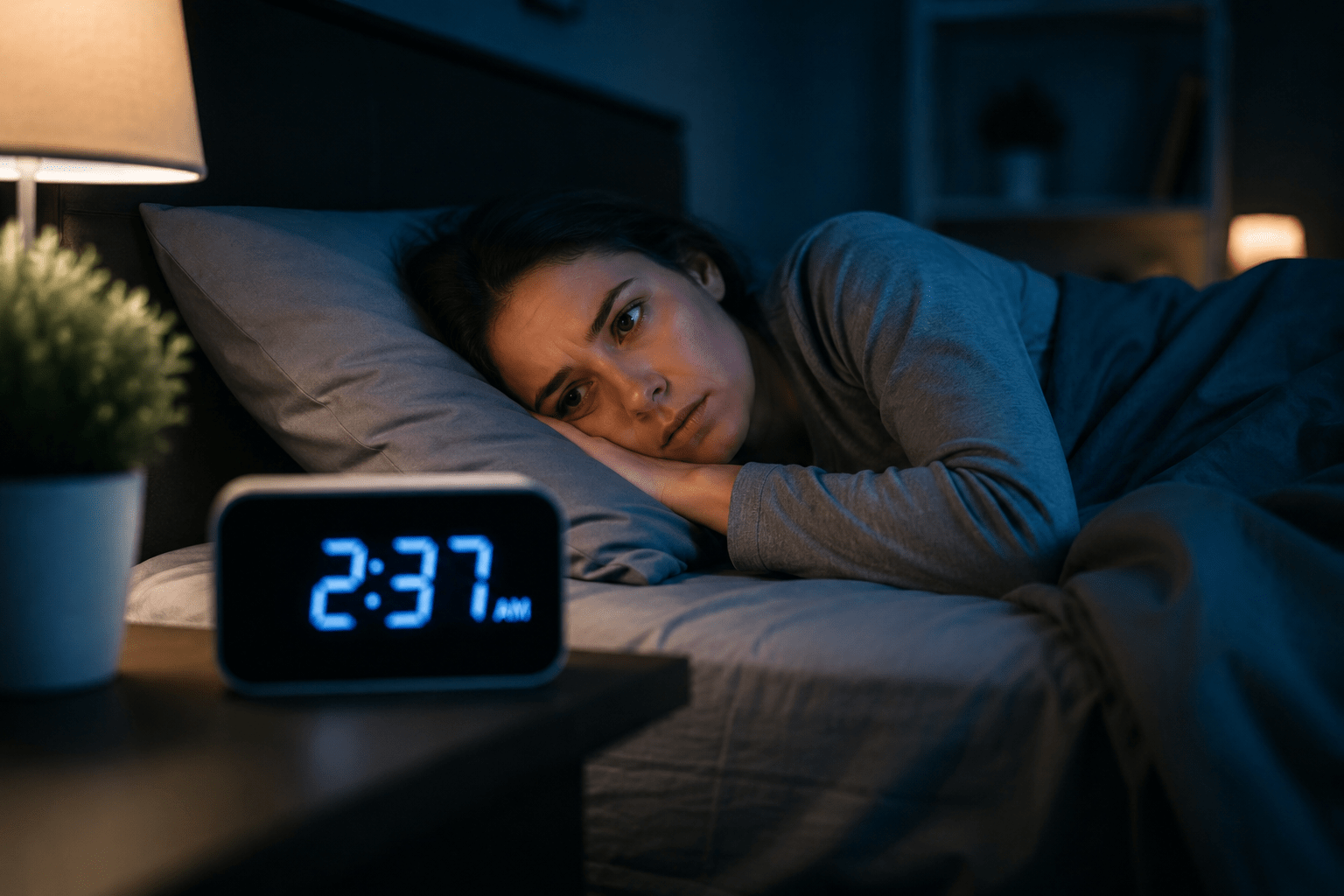
Why You Keep Checking the Time at Night Without Meaning To
Some nights, looking at the clock becomes almost automatic.
You wake up for a moment, look at the clock, try to go back to sleep, then look at the clock again in a few minutes without really trying.
For some people, this turns into a frustrating nighttime cycle:
- wake up
- check the time
- calculate remaining sleep
- feel stressed
- struggle to relax again
Others describe becoming mentally alert the moment they see the time at night.
This habit is often worsened during times of stress, sleep anxiety, burnout or after a few nights of poor sleep.
It’s normal to check the clock once in a while, but checking the clock, repeatedly, during the night may inadvertently make you more alert at night, and make it more difficult to relax.
Why the Brain Starts Monitoring Time at Night
When sleep feels uncertain, the brain often starts monitoring sleep itself.
For some people, the mind becomes highly focused on:
- how long they have slept
- how much time remains before morning
- whether they are falling asleep “fast enough”
- whether sleep problems are getting worse
This increased vigilance can create a cycle where the brain stays partially alert throughout the night.
Many people notice the clock-checking habit becomes strongest during periods of:
- stress
- overthinking
- emotional exhaustion
- inconsistent sleep
- bedtime anxiety
Instead of naturally relaxing the brain starts to view sleep as something it must be constantly on guard against.
Why Seeing the Time Can Suddenly Increase Stress
For many people, seeing the clock immediately changes emotional state.
A quick glance at:
“3:17 AM”
may suddenly trigger thoughts like:
- “I’m not getting enough sleep.”
- “Tomorrow is going to be awful.”
- “Why am I still awake?”
- “I need to fall asleep now.”
The body may then become:
- mentally alert
- physically tense
- emotionally frustrated
- more aware of wakefulness
Ironically, worrying about lost sleep often increases wakefulness even more.
Many people notice the stress becomes strongest after mentally calculating:
How many hours are left before morning
- Why Your Body Feels Uneasy Before Sleep
- Why Your Mind Starts Overthinking When You Try to Sleep
- Why Your Body Feels Tense at Night
Why Poor Sleep Can Make the Habit Worse
After several nights of poor sleep, many people become more sensitive to nighttime wakefulness.
Small awakenings that normally would have been ignored suddenly feel important.
For some people, the brain begins anticipating sleep problems before bedtime even starts.
This may increase:
- nighttime alertness
- body awareness
- clock-checking behavior
- frustration about sleep
- difficulty relaxing again after waking
The habit itself may slowly reinforce nighttime anxiety over time.
Why the Habit Often Happens Automatically
Many people notice they check the time almost unconsciously.
This happens because the brain gradually learns:
Nighttime waking = check the clock
Over time, the behavior becomes automatic.
Some people even find themselves waking up repeatedly at similar times every night and immediately looking for the clock without fully realizing it.
The more emotionally important sleep becomes, the more strongly the brain may monitor it.
Breaking the Clock-Checking Cycle
The aim is not to force good sleep.
The goal is to reduce the needless overnight monitoring.
Helpful strategies may include:
- turning the clock away from bed
- avoiding repeated time calculations
- reducing pressure to “sleep perfectly”
- improving sleep consistency
- limiting late-night stimulation
- reducing caffeine later in the day
Some people also notice improvement from:
- avoiding bright screens after waking
- using calming audio instead of checking time
- focusing less on exact sleep hours
- creating slower nighttime routines
Often, reducing sleep pressure itself helps the brain relax more naturally again.
Other Symptoms That May Happen Alongside Nighttime Time-Checking
Some people also experience:
- racing thoughts
- body tension
- restlessness
- chest awareness
- sudden alertness
- difficulty drifting back to sleep
- breathing awareness
- sleep anxiety
- light sleep sensations
For some individuals, a number of nighttime symptoms may begin to emerge simultaneously during episodes of stress or sleep disturbance.
- That “Something Feels Wrong” Feeling Before Sleep
- Why You Suddenly Feel Restless Once You Get Into Bed
- Why You Keep Waking Up Every 2 Hours
When Sleep Problems Should Be Taken Seriously
Waking up at night from time to time is a normal part of sleep. Persistent or worsening sleep disruption should always be discussed with a healthcare professional.
Medical evaluation may be important if symptoms happen alongside:
- severe insomnia
- worsening panic attacks
- breathing difficulty
- severe daytime exhaustion
- chest pain
- neurological symptoms
- worsening mental health symptoms
Sleep-related symptoms should never be self-diagnosed online without proper medical guidance.
Related Sleep Guides
Many nighttime symptoms may look like sleep anxiety , overstimulation at night , broken sleep patterns . You can also visit our Sleep Problems and Better Sleep Guide for further explanations and recovery tips, related to sleep.
Frequently Asked Questions
Why do I keep checking the time at night?
Stress, sleep anxiety, poor sleep, and nighttime over-monitoring may increase the habit of repeatedly checking the clock during the night.
Can checking the time make insomnia worse?
For some people, yes. Seeing the time may increase stress, frustration, and mental alertness, making relaxation harder.
Why do I calculate how much sleep I have left?
Many people naturally begin monitoring remaining sleep during stressful periods or after poor sleep, especially when worried about daytime exhaustion.
Should I remove the clock from my bedroom?
Some people notice improvement by turning the clock away or avoiding repeated time-checking during nighttime awakenings.
Is waking up and checking the time normal?
Occasional nighttime waking is common, but persistent sleep disruption or worsening anxiety should always be properly evaluated if ongoing.
Trusted Sources & References
- Sleep Foundation — Anxiety and Sleep
- Cleveland Clinic — Sleep Anxiety
- NIH PubMed — Stress and Sleep Disturbance
Bottom Line
Checking the time every few minutes at night can slowly turn a normal waking up at night into a stressful reminder loop of frustration and alertness .
This habit might be caused by stress, lack of sleep, emotional exhaustion, and sleep anxiety. While it is normal to wake up occasionally at night, the continuous watchfulness of sleep may, in fact, make relaxation more difficult.
If you can lower your sleep pressure, improve your nighttime routines, and break the habit of constantly checking the time, your brain may slowly start to feel more relaxed about sleep again.
About the Author
Kishalay Roy is the publisher of CoreBalanceLife, a website about sleep and topics like nighttime anxiety, strange sensations in the body before sleep, sleep disruption and practical education about sleep wellness. He aims to produce calm, evidence-based content that will help readers to better understand common nighttime symptoms and sleep-related problems.