Why Do Small Problems Feel Bigger at Night?
Why Do Small Problems Feel Bigger at Night?
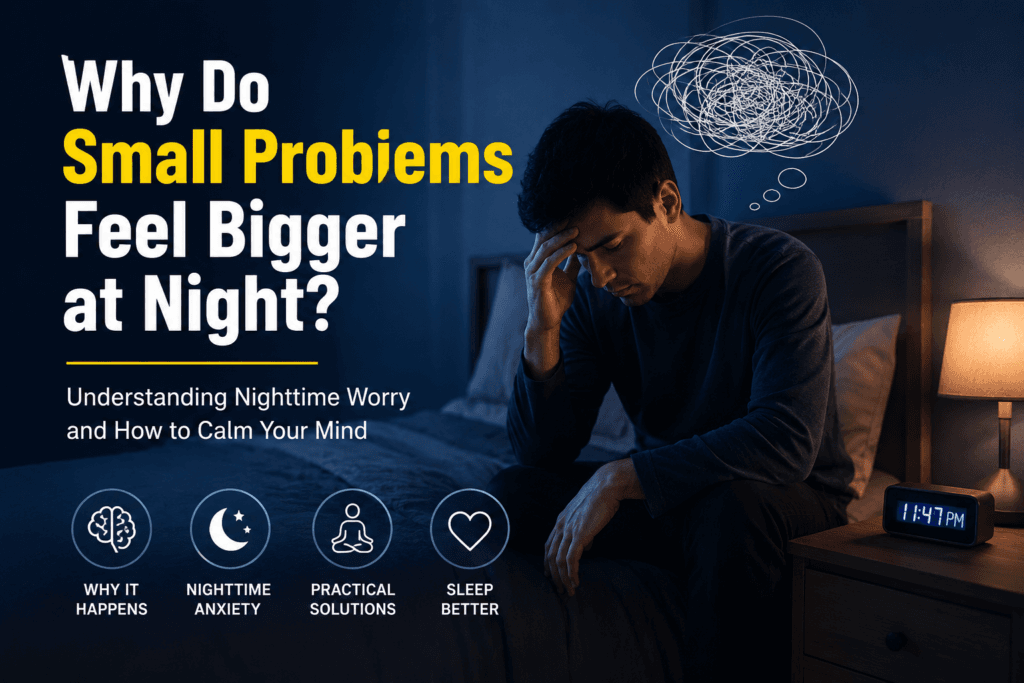
If small problems seem much bigger at night, you’re not imagining it.
For many people, worries, unfinished work, relationship problems, work stress or future plans seem to become more serious the moment they get into bed. Your mind is tugged in so many different directions during the day. At night there are fewer distractions and the brain has more room to process problems that were pushed to the side during the day.
In many cases, the problem itself has not changed. What changes is how your tired brain processes it.
Have You Ever Noticed This?
Maybe you spent the whole day feeling okay.
You handled your responsibilities.
You talked to people.
You got through work.
Then bedtime arrived.
Suddenly, a conversation from three days ago starts bothering you.
A small mistake feels huge.
An unfinished task feels urgent.
A future problem feels like a disaster waiting to happen.
Then the next morning, after some sleep, the same problem often feels much smaller.
If this sounds familiar, you’re far from alone.
Many people experience a form of nighttime emotional magnification where ordinary concerns feel more intense once the day slows down.
Why Problems Often Feel Bigger After Dark
The brain works differently at night than it does during the middle of a busy day.
During daylight hours, your attention is constantly occupied by:
- work
- conversations
- notifications
- responsibilities
- errands
- entertainment
These activities act like background noise that keeps many worries in the distance.
At night, most of those distractions disappear.
The room becomes quiet.
Your phone is down.
There are fewer things competing for your attention.
As a result, concerns that stayed in the background all day can suddenly move to the front of your awareness.
The problem may not actually be bigger.
It simply has more of your attention.
Your Brain Finally Gets Time to Process Things
Many people spend their entire day moving from one task to another.
There is rarely time to stop and think deeply.
When bedtime arrives, the brain often uses that quiet period to process unresolved thoughts and emotions.
This can include:
- unfinished work
- relationship concerns
- financial worries
- health concerns
- future plans
- embarrassing memories
Some people assume this means something is wrong.
In reality, it often means the brain is finally trying to process things it ignored during the day.
Mental Fatigue Changes Perspective
One reason worries feel larger at night is simple mental exhaustion.
A tired brain does not always evaluate situations as effectively as a rested brain.
When you are mentally drained:
- patience becomes lower
- emotional reactions become stronger
- perspective becomes narrower
- uncertainty feels more uncomfortable
This is one reason why a small concern can feel overwhelming at 11 PM and manageable at 8 AM.
The situation itself may not have changed.
Your ability to respond to it has.
Anxiety Often Becomes More Noticeable at Night
Anxiety does not always appear suddenly.
Sometimes it is present throughout the day but hidden behind activity.
At night, the silence makes it easier to notice.
This is why many readers who experience sleep anxiety worrying about sleep or why anxiety gets worse at night often describe the same pattern.
Everything feels normal during the day.
Then bedtime arrives and worries seem to multiply.
The anxiety may not actually be stronger.
It simply becomes harder to ignore.
The Need for Certainty
Nighttime thinking often follows a predictable pattern.
The brain starts asking questions.
What if I made a mistake?
What if tomorrow goes badly?
What if something doesn’t work out?
What if I forgot something important?
The brain wants answers.
The problem is that many of these questions do not have immediate answers.
Trying to solve them at midnight often creates even more thinking.
Instead of feeling relieved, you become more alert.
This is one reason many people find themselves stuck in overthinking when trying to sleep.
Why Everything Feels More Emotional at Night
Emotions often feel stronger when you are tired.
Think about how children become more emotional when they are exhausted.
Adults are not very different.
Sleep pressure and mental fatigue can make emotional reactions stronger.
This may explain why:
- criticism feels harsher
- uncertainty feels scarier
- problems feel larger
- worries feel more urgent
The emotional volume gets turned up.
The Role of Poor Sleep
Poor sleep and nighttime worry often feed each other.
You worry because you cannot sleep.
Then you sleep poorly.
The next day you feel more emotionally sensitive.
Then the following night the worries feel even stronger.
This cycle can continue for weeks if it is not interrupted.
Many people who struggle with keep checking the time at night experience this exact pattern.
The more attention they give sleep, the more difficult sleep becomes.
Signs It Is Usually Not Serious
In many cases, nighttime worry is a normal response to stress, fatigue, or temporary life pressure.
Common signs include:
- worries feel stronger mostly at night
- concerns seem smaller in the morning
- symptoms come and go
- stress levels have recently increased
- sleep quality has been poor
Many people wake up the next day wondering why they felt so overwhelmed the night before.
What Can Help?
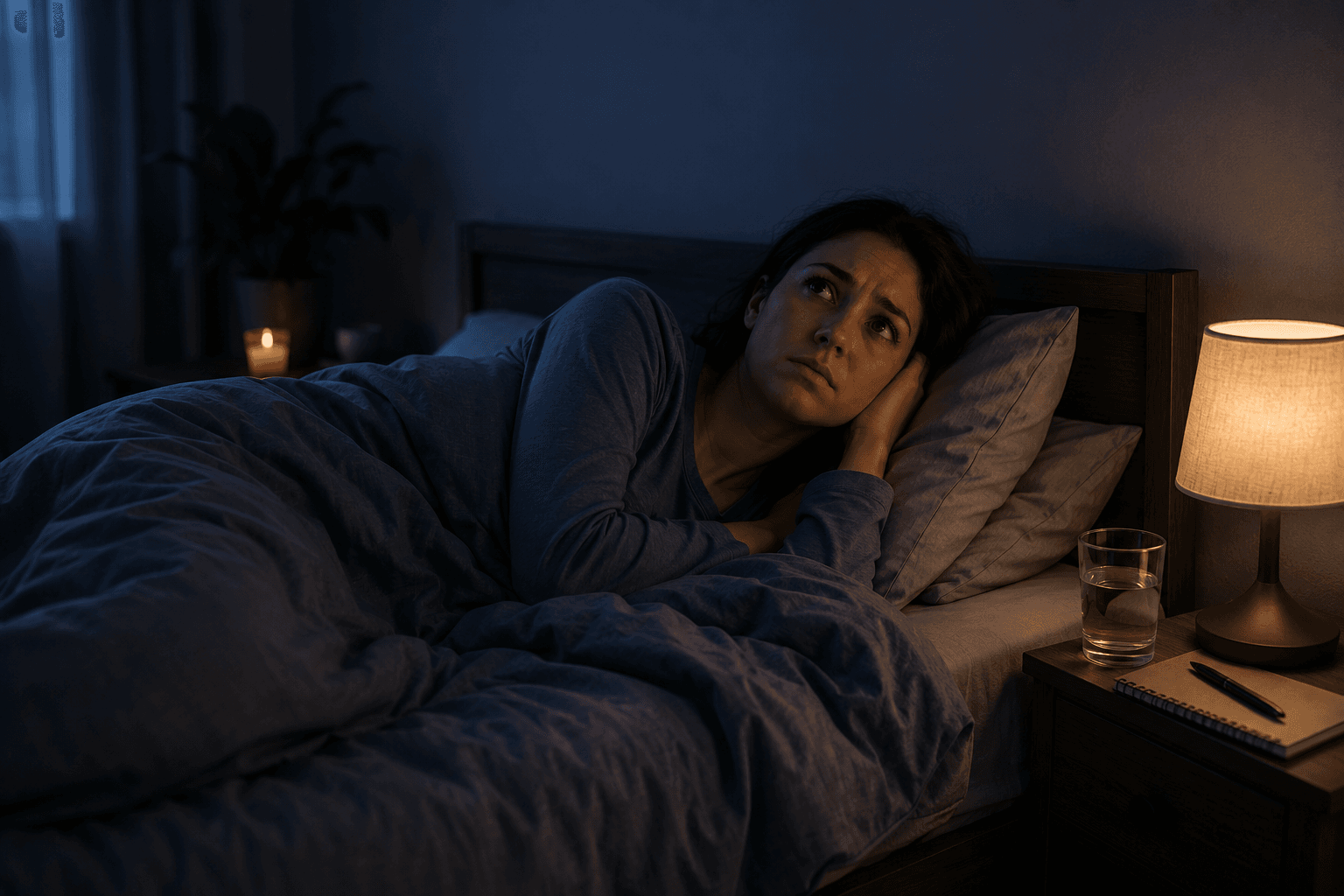
Write the Thought Down
A simple notebook can be surprisingly effective.
Instead of carrying a thought into bed, write it down.
You are not trying to solve the problem.
You are simply giving your brain permission to stop holding onto it.
Avoid Major Decisions at Night
Late-night decisions are often influenced by exhaustion and emotion.
If possible, delay important decisions until the next day.
Many concerns look very different after a good night’s sleep.
Create a Consistent Wind-Down Routine
A predictable bedtime routine helps signal that the day is ending.
Examples include:
- reading
- light stretching
- calm music
- journaling
- breathing exercises
Consistency is often more important than complexity.
Limit Stimulation Before Bed
Many people unknowingly increase nighttime worry by consuming:
- stressful news
- work emails
- social media arguments
- emotionally intense content
Reducing stimulation before bed may help the mind settle more easily.
Remind Yourself That Night Changes Perspective
This simple reminder can be powerful:
“I don’t need to solve this tonight.”
Many problems feel more manageable after rest.
When to Seek Medical Advice
Occasional nighttime worry is common.
However, consider speaking with a healthcare professional if:
- anxiety feels overwhelming
- symptoms persist for weeks
- sleep problems continue getting worse
- panic attacks occur regularly
- daily functioning is affected
- depression symptoms are present
Professional support can help identify underlying causes and provide appropriate treatment options.
Frequently Asked Questions
Why do my worries get worse at night?
Nighttime removes many distractions, making worries easier to notice and harder to ignore.
Is it normal for problems to feel bigger before bed?
Yes. Many people experience stronger emotional reactions when tired and mentally exhausted.
Why do I feel calmer in the morning?
A rested brain often processes information more effectively and responds with greater emotional balance.
Can poor sleep increase anxiety?
Yes. Poor sleep and anxiety can reinforce each other and create a cycle that becomes difficult to break.
Why do I overthink once I get into bed?
The brain finally has quiet space to focus on thoughts that were pushed aside during the day.
Is this a sign of a mental health problem?
Not necessarily. Occasional nighttime worry is common. However, persistent anxiety that affects sleep or daily life deserves professional attention.
Related Sleep Topics
Sleep anxiety worrying about sleep
Overthinking when trying to sleep
Why anxiety gets worse at night
Keep checking the time at night
Fall asleep faster with racing thoughts
Sources and Medical References
Sleep Foundation
https://www.sleepfoundation.org
Cleveland Clinic
https://health.clevelandclinic.org
Mayo Clinic
https://www.mayoclinic.org
National Institutes of Health (NIH)
https://www.nih.gov
PubMed
https://pubmed.ncbi.nlm.nih.gov
Conclusion
If small problems feel bigger at night, it does not necessarily mean your problems are getting worse.
More often, it means your brain is tired, distractions have disappeared, and worries have become easier to notice.
Understanding this pattern can help reduce some of the fear that often comes with nighttime thinking.
Sometimes the best thing you can do is acknowledge the thought, write it down, and give yourself permission to revisit it tomorrow with a clearer mind.
About the Author
Kishalay Roy is the publisher of CoreBalanceLife, a website about sleep problems, nighttime anxiety, sleep habits, and sleep recovery. He researches and writes evidence-informed content with the goal of helping readers better understand common sleep-related concerns and improve their sleep health.